
A British F-35B fighterjet that made an emergency landing at Thiruvananthapuram International Airport in Kerala nearly four weeks ago is finally being repaired by a team of UK specialists. If that fails, the aircraft will be dismantled and transported—likely in a C-17 Globemaster. The incident was closely observed by global and Indian security establishments, highlighting the complexity of the F-35 and its reliance on specialised equipment and personnel. Dismantling an F-35 is a complex process involving detailed logging and security protocols to prevent data breaches.
The F-35’s misfortune in India attracted attention for several reasons. Just two months earlier, India and Pakistan were engaged in a four-day military stand-off that underscored the importance of air power. Both sides made competing claims of downing each other’s aircraft, drawing public interest.
Amid the tension, Pakistan announced it would begin acquiring around 40 Chinese fifth-generation J-35A fighters as early as August 2025. Reports claimed that Foreign Minister and Deputy PM Ishaq Dar finalised the logistics and financing of the deal during a post-ceasefire visit to China. However, Pakistan’s Defence Minister Khawaja Asif denied the deal’s finalisation, dismissing the reports as “media chatter.”
If realised, the J-35 deal would mark China’s first export of the type. It could also include the KJ-500 AEW&C aircraft and HQ-19 ballistic missile defence systems. Some reports suggest a nearly 50% discount, valuing the package at approximately $4.6 billion. A key question remains: how would a financially struggling Pakistan, reliant on IMF loans, afford such an expensive acquisition? Though speculative for now, China’s potential J-35 export would be a milestone for its defence industry. Yet, only around 10 have been built so far, and Chinese induction begins only this year. Earlier delivery timelines indicated 2029.
Should Pakistan acquire the J-35, it would significantly alter the subcontinent’s air dominance equation. This development could pressure India to expedite both the indigenous Advanced Medium Combat Aircraft (AMCA)—currently expected by 2035—and to secure an interim fifth-generation platform, thereby sparking a growing debate.
What’s the Deal with Fifth Generation Fighters?
Fifth-generation aircraft were pioneered by the Lockheed Martin/Boeing F-22 Raptor in 2005. These jets are built for network-centric combat and feature low observable signatures using advanced materials and shaping. They employ multifunction AESA radars, low-probability-of-intercept capabilities, and IRST sensors for 360-degree situational awareness. Advanced avionics rely on high-speed integrated circuits and data buses. The combination aims to provide “first-look, first-shot, first-kill” capability
Fifth-generation jets feature integrated electronic warfare (EW) systems, navigation, communication, vehicle health monitoring, and fibre-optic data transmission. Thrust-vectoring enhances manoeuvrability and shortens take-off and landing distances. Supercruise is standard. Radar cross-sections are minimised across a broad frequency spectrum.
The primary weapons are carried in internal weapon bays. Signature-reduction techniques include special shaping approaches, thermoplastic materials, extensive structural use of advanced composites, conformal sensors, heat-resistant coatings, low-observable wire meshes to cover intake and cooling vents, heat-ablating tiles on the exhaust troughs, and coating both internal and external metal areas with radar-absorbent materials and paints.
Some are very expensive: the F-22 costs around $227 million, and the F-35 around $100 million per unit, despite mass production.
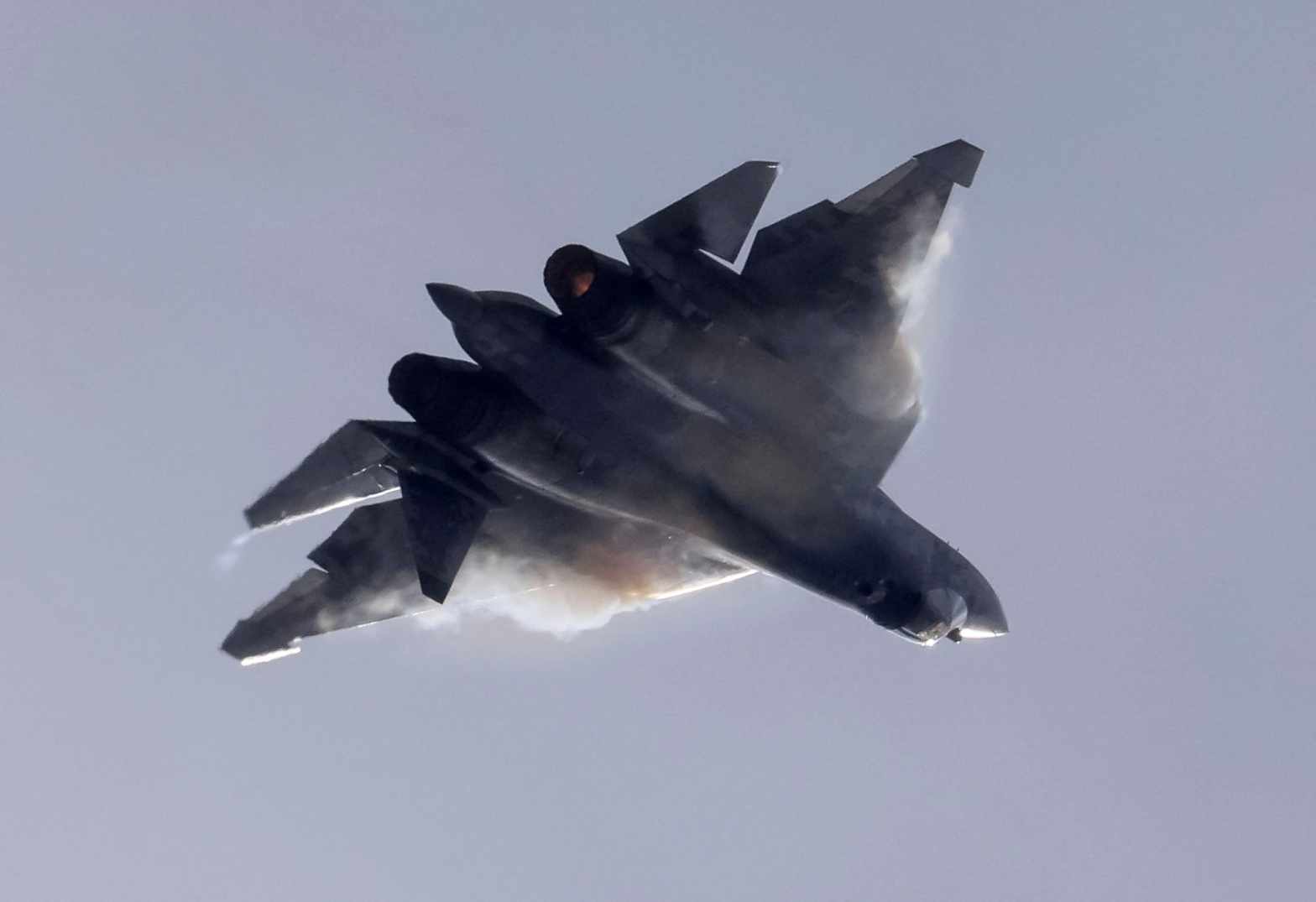
Other fifth-generation fighters include Russia’s Su-57 and China’s J-20. The J-20 has been flying since 2011 and entered service in 2018. China now operates nearly 300. The J-31 (now J-35) flew in 2012 and is expected to enter service in 2025.
South Korea’s KF-21 Boramae, built for the Korean and Indonesian air forces, has stealth features but currently carries weapons externally. Internal bays are expected in the KF-21EX version. The first flight was on 19 July 2022, with six prototypes built so far. Service entry is scheduled for 2026.
Turkey’s TAI Kaan, with BAE Systems as subcontractor, had its maiden flight on 21 February 2024. Only one aircraft exists, with service induction expected by 2030.
The Global Combat Air Programme (GCAP) – a UK–Japan–Italy initiative – aims to develop a sixth-generation stealth fighter by 2035. In Europe, Dassault, Airbus, and Indra Sistemas are working on FCAS to replace the Rafale and Typhoon fleets by 2040.
Stealth Aircraft and Stand-Off Weapons
The ongoing Ukraine conflict, and more recently, the India–Pakistan flare-off, have emphasised the operational value of long-range stand-off weapons. The use of Russian Kha-series missiles (Kh-47M2 Kinzhal, Iskander), the R-37M, Indo-Russian BrahMos, French SCALP-EG, and the Chinese PL-15 were all closely watched.
In these two conflicts, the adversary aircraft were forced to use stand-off weapons both for offensive and defensive purposes. Own aerial assets had to be operated at very safe distances, also to avoid long-range surface-to-air missiles such as the S-400.
Possessing the stealthy fifth-generation aircraft will allow going closer to the target and add stand-off distance to the long-range weapon. For instance, such a warplane can move closer to the border or penetrate into the adversary’s territory without being seen, and thus deliver weapon loads on target and return unharmed. Similarly, they will have an advantage in aerial engagements with the ability to shoot-and-scoot without being seen.
Future air warfare will emphasize Very Long Beyond Visual Range (VL-BVR) combat and ground engagements. Though anti-stealth radar systems—like Russia’s Nebo-ME, China’s JY-27V, and India’s Surya—are in development, stealth remains a top-tier capability. B-2 bombers reportedly entered Iranian airspace undetected. Russia is building the PAK DA stealth bomber; China has the H-20. Sixth-generation fighters like the F-47 and China’s J-36/J-50 are also under development.
India’s AMCA Program
New Delhi is actively working on its own fifth-generation jet. India’s AMCA will be a stealth, multirole, single-seat, twin-engine, air superiority fighter capable of ground-strike, Suppression of Enemy Air Defences (SEAD), and Electronic Warfare (EW) missions. Designed by the Aeronautical Development Agency (ADA), it will be built by a public–private joint venture. The initial development cost is estimated to be around $2 billion. In March 2024, the project received approval from India’s Cabinet Committee on Security for prototype development. Mass production is expected to begin by 2035.
The development of the AMCA will take place in two phases: AMCA Mk-1 and AMCA Mk-2, which will primarily differ in indigenous content and futuristic features. Mk-2 will focus more on stealth, electronic warfare (EW), and a futuristic pilot–AI interface. The AMCA Mk-2 will be equipped with Directed Energy Weapons (DEW) and more powerful thrust-vectored engines. It will also incorporate select sixth-generation technologies. The aircraft is expected to eventually replace the Sukhoi Su-30MKI of the Indian Air Force.
DRDO aims for prototype rollout by 2027, first flight in 2029, and certification by 2032. Five prototypes are planned, each costing around $120 million and spaced 8–9 months apart. The Indian Air Force (IAF) plans to procure 125 aircraft.
The government has yet to finalise a production partner. The Aeronautical Development Agency (ADA) prefers private-sector involvement over Hindustan Aeronautics Limited (HAL), the government-owned defence manufacturer, citing its “poor delivery track record.” ADA’s push to change the production partner stems from a desire to avoid further delays, especially after setbacks due to development funding issues and delays in US government clearance for the licensed production of engines. The private-sector partner would be responsible for the development, production, and lifetime maintenance of the jet.
On 27 May 2025, the Defence Ministry approved the execution model for the Advanced Medium Combat Aircraft (AMCA). Subsequently, on 18 June, the Aeronautical Development Agency (ADA) issued an Expression of Interest (EoI), inviting Indian public and private firms—individually or as consortia—to participate in the programme. The deadline for submitting proposals is 16 August 2025. Meanwhile, India is also in discussions with global aerospace firms for the co-development of the AMCA’s engine, with a firm demand for full intellectual property ownership.
Does India Really Need an Interim Fifth-Gen Fighter?
There is a growing consensus that India must acquire an interim fifth-generation fighter aircraft. However, available options remain limited.
President Donald Trump announced that the U.S. is willing to offer the F-35 to India. However, no formal dialogue appears to have begun. Notably, the U.S. had earlier denied F-35 access to NATO ally Turkey after it acquired the Russian S-400 air defence system—similar to India’s situation. The S-400 reportedly has the capability to record and compromise the F-35’s electronic signature. Additionally, Washington prefers that India first purchase a fourth-generation fighter under the MRFA competition before the F-35 can be seriously considered. Clearly, complex geopolitics are at play.
India remains cautious about US pressure and geopolitical unpredictability, especially as Washington strengthens ties with Pakistan. These factors make the F-35 offer unlikely or impractical.
The Su-57 is a more viable candidate. It is combat-tested in Syria and Ukraine. Russia has offered to set up Indian production and share technology.
The Su-57 evolved from the Indo-Russian FGFA project (2007), which itself derived from Russia’s PAK FA program. India exited in 2018 due to concerns over cost, performance, and work-share imbalance.
Since then, Sukhoi has continued Su-57 development. The export variant, Su-57E, debuted at MAKS 2019. It has since appeared at several global airshows, including in China and India.
Russia has produced approximately 42 Su-57 aircraft and has ordered 30 more. The estimated cost ranges from $35–50 million per unit, potentially rising to $60–75 million with local production, still cheaper than the F-35.
Russia is also developing the Su-75 Checkmate (LTA)—a single-engine, AI-enabled fighter intended to compete with the F-35 and J-35. It had its maiden flight in 2024, with induction targeted for 2027. The Su-75 is designed to rival fifth-generation fighters like the F-35 and China’s Shenyang J-35, and incorporates AI integration for enhanced capabilities.
Russia has also offered to upgrade the Su-30MKI to the Su-35 technology standard or manufacture the Su-35S in India with full Transfer of Technology (ToT). Also on offer are the Russian stealth drone Sukhoi S-70 Okhotnik-B, which is designed for Manned-Unmanned Teaming (MUM-T) with the Su-57, and the long-range R-37M air-to-air missile (AAM).
Challenges remain. Su-57 production is slow but gradually increasing. Russia remains heavily engaged in the Ukraine conflict, which limits focus on exports. Sanctions complicate payment mechanisms. India’s oil imports from Russia have worsened the trade balance, although the impact is easing due to falling prices. Additionally, the Indian Air Force (IAF) already operates a 60% Russian-origin fleet, and may now prefer to diversify its defence suppliers.
Way Ahead for India
With China’s air capabilities expanding rapidly, regional powers such as Japan, South Korea, and India must invest in advanced fighter aircraft to maintain credible deterrence. If left unchecked, China’s growing technological and numerical lead could soon become unbridgeable.
The F-35 is not currently on the table. The Su-57 presents a time-sensitive, cost-effective alternative, as it is expected to be cheaper. Existing Russian aircraft production lines can be leveraged to some extent. While the decision may anger the Americans, such friction is not unprecedented.
GCAP could be viable long-term, but its partners are US allies and may align with US platforms like the Boeing F-47.
For India to be part of the big league, the AMCA must succeed. In addition to acquiring two squadrons of the Su-57, it may be worthwhile to rapidly build a large inventory of 4.5-generation fighters such as the LCA Mk2 and Rafale. Simultaneously, India should prioritize the procurement of long-range air-to-surface missiles like the BrahMos II and extended-range air-to-air missiles such as the Astra III or the Russian R-37.
India must avoid reactive decisions – but the time to act is now.
Note: The article was originally written by the Author for Russia Today on July 21st, 2025; it has since been updated.
Header Picture Credit: Reuters
Twitter: @AirPowerAsia
 Air Power Asia