
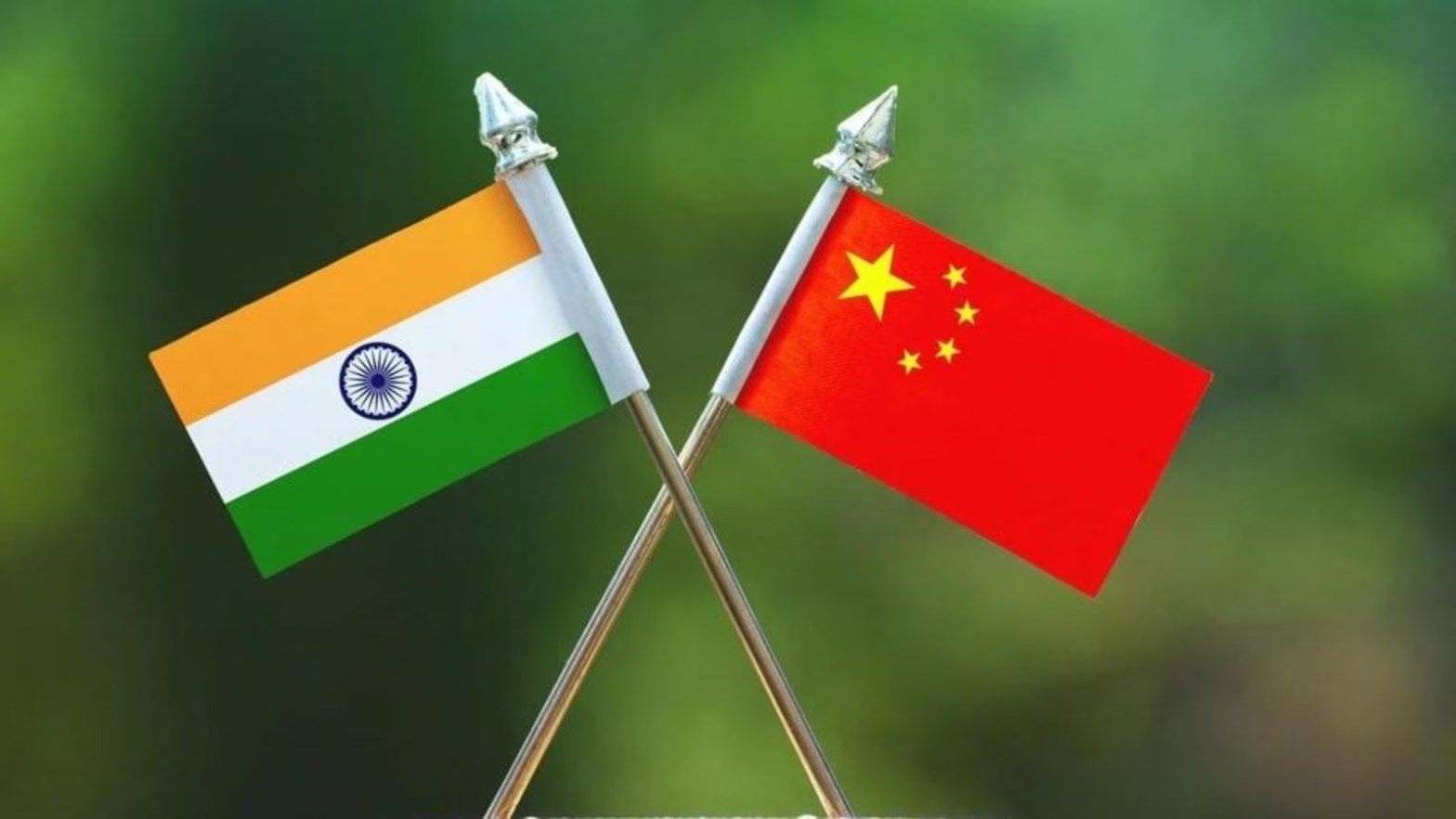
As Prime Minister Modi gets set to go to China, Chinese Foreign Minister Wang Yi is here in India between August 18 and 19. Are the two “Asian Giants” actively working to mend their strained bilateral relations, signalling a push towards normalising ties and fostering greater stability between the two? A series of high-level bilateral engagements have been unfolding. Rebuilding bilateral relations, which came under major strain following the Galwan Valley clashes in June 2020. Modi is scheduled to attend the Shanghai Cooperation Organisation (SCO) Summit from August 31 to September 1, 2025, in Tianjin. He will also have a bilateral with Chinese President Xi Jinping. It will be PM Modi’s 6th visit to China.
Wang Yi is holding border talks with National Security Advisor (NSA) Ajit Doval. Both are the designated Special Representatives (SR) for the boundary talks between the two countries. This is the 24th round of the SR-level talks. Doval travelled to China in December last year and held the SR talks with Wang Yi. The two had last met in June during the 20th Meeting of the SCO Security Council Secretaries, and had underscored the need to promote overall India-China bilateral relations, including by fostering greater people-to-people ties. Wang will also hold talks with External Affairs Minister S Jaishankar.
During the recent Op Sindoor, India had accused China of providing real-time intelligence and substantial military support to Pakistan. But more recently, there has been a thaw. It started with the Modi-Xi bilateral meeting on the margins of the 16th BRICS Summit at Kazan, Russia, in October 2024. Later, in October 2024, the two sides had reached an agreement on patrolling arrangements along the Line of Actual Control (LAC) in Depsang and Demchok, clearing the last of the post-Galwan friction points. Defence Minister Rajnath Singh and Jaishankar visited China in the last two months to attend the SCO meetings.
Other positives have been Beijing allowing the resumption of the Kailash Mansarovar Yatra, and New Delhi restarting the issuance of tourist visas to Chinese nationals. China confirmed close communication with India to resume direct flights, potentially ending a five-year suspension. The resumption of border trade after a five-year freeze, through designated trade points at Lipulekh Pass in Uttarakhand, Shipki La Pass in Himachal Pradesh, and Nathu La Pass in Sikkim.
Trump’s strong statements and punishing tariffs may have unwittingly achieved what once seemed improbable, a thaw in India-China relations, or at least the first signs of one.
Historical Issues and Showdowns
China and India maintained peaceful relations for thousands of years, but their relationship has varied since the Chinese Communist Party (CCP)’s victory in the Chinese Civil War in 1949 and the annexation of Tibet by China. Cultural and economic relations between China and India date back to ancient times. The Silk Road not only served as a major trade route between India and China, but is also credited for facilitating the spread of Buddhism from India to East Asia.
The contemporary China and India relations have been characterised by border disputes, resulting in three military conflicts: the Sino-Indian War of 1962, the border clashes in Nathu La and Cho La in 1967, and the 1987 Sumdorong Chu standoff. Since 2013, border disputes have re-emerged to take centre stage in the two countries’ mutual relations. In early 2018, the two armies engaged in a standoff at the Doklam plateau along the disputed Bhutan-China border. Since summer 2020, armed standoffs and skirmishes at multiple locations along the entire Sino-Indian border escalated. Both countries have steadily established military infrastructure along border areas. Additionally, India remains wary about China’s strong strategic bilateral relations with Pakistan, and China’s relations to separatist groups in Northeast India, while China has expressed concerns about Indian military and economic activities in the disputed South China Sea as well as the hosting of anti-China activity from Tibetan exiles. Yet, the two nations have sought economic cooperation despite frequent border disputes and economic nationalism in both countries.
Modi-Xi Meetings
PM Modi hosted Xi Jinping at his hometown Ahmedabad in September 2014. He made his first visit to China in May 2015. President Xi Jinping received Modi in Xi’an (the first world leader to be hosted by Xi at his hometown), before official talks in Beijing. In July 2015, they met at Ufa, Russia, ahead of SCO and BRICS summits. In June 2016, they met at the sidelines of the SCO meet in Tashkent, Uzbekistan.
In September 2016, they had a bilateral on the sidelines of the G20 summit in Hangzhou, China. By now, the relations between the two Asian giants had been on a downward trajectory over China vetoing India’s petitions to ban Jaish-e-Mohammad chief Masood Azhar in the UN Security Council, and its blocking of India’s NSG aspirations. PM Modi had also raised India’s concerns over the multi-billion dollar China-Pakistan Economic Corridor (CPEC) being laid through PoK and told Xi that “to ensure durable ties and their steady development, it was paramount that we respect each other’s aspirations, concerns, and strategic interests”. The very next month they met in October 2016 at the BRICS Summit at Goa. They held “fruitful” discussions on key issues including terrorism, NSG, and enhancing trade and investment. The tone of the talks on the sidelines of the 8th BRICS summit was affirmative and positive, unlike the bitterness and acrimony that had marked India-China relations in preceding months.
In June 2017, they had a bilateral at the SCO meet in Astana, Kazakhstan. At this SCO summit, India and Pakistan formally joined the security bloc spearheaded by China and Russia. The run-up to Modi and Xi’s meeting in Astana was fraught with tension as only a month ago, India had declined an invitation to a Belt and Road Initiative summit hosted by Beijing. The Chinese president had called for more high-level interactions, institutionalized exchanges, strategic communication, and policy alignment between the two countries.
They met next at the G20 Summit in Hamburg, Germany in July 2017. This was amid a tense standoff between Indian and Chinese troops at Doklam. Although a formal bilateral meeting between the two leaders had not been scheduled as Beijing felt that the “atmosphere was not right” for official dialogue, there was conversation on a range of issues.
The 9th BRICS Summit was at Xiamen, China, in September 2017. After 73 days, the Doklam face-off was resolved through diplomatic channels and Modi and Xi held a substantive bilateral meeting at Xiamen. Setting the course for a new “forward-looking” round of engagement anchored by fresh mechanisms to ensure calm at the borders, the two leaders reaffirmed their understanding that differences shouldn’t be allowed to become disputes. China, for the first time, did not object to the listing of Pakistan-based JeM, LeT, and the Haqqani Network as international terror groups.
In April 2018, there was an informal summit at Wuhan. Modi-Xi’s camaraderie once again made waves during the “Heart to Heart summit.” The two leaders had a series of one-on-one informal interactions. With Doklam still weighing on their minds, Modi and Xi decided that they would issue strategic guidance to their respective militaries to strengthen communications and build trust and understanding. No agreements were inked, nor any announcements made, since the focus of the two leaders was to take stock of and further strengthen bilateral relationships as well as the strategic and long-term partnership.
In June 2018 was the SCO summit at Qingdao, China. Both countries, and the international community, spoke positively of this meeting. China was willing to, together with India, take forward the beginning made at Wuhan to enhance political mutual trust and comprehensively carry out mutually beneficial cooperation, in a better, faster, and steadier manner. Modi and Xi also met on the sidelines of the G-20 summit in Buenos Aires in November 2018. Both agreed that there had been a “perceptible improvement” in bilateral ties and both sides were optimistic that 2019 would be an even better year for India-China relations. In October 2019 Xi and Modi met at an informal summit in Chennai, India. Modi gave Xi a guided tour of the Group of Monuments at Mahabalipuram. The two leaders held extensive talks on dialogue and mutual learning among civilizations during the tour.
After Galwan, there was a major lull. A bilateral meeting was held between Modi and Xi Jinping in October 2024 on the sidelines of the BRICS summit in Kazan, Russia. Welcoming the recent agreement for complete disengagement and resolution of issues that arose in 2020 in the India-China border areas, PM Modi underscored the importance of properly handling differences and disputes and not allowing them to disturb peace and tranquillity. The two leaders agreed that the Special Representatives on the India-China boundary question would meet at an early date to oversee the management of peace and tranquillity in border areas and to explore a fair, reasonable, and mutually acceptable solution to the boundary question.
PM Modi will be making his sixth visit to China. He has had six or more visits to Germany, Japan, Russia, United Arab Emirates, France, and the United States.
Confidence Building Measures
Confidence Building Measures (CBM) between India and China are agreements and protocols aimed at reducing tensions and preventing conflict along their shared border, the LAC. These measures are crucial for maintaining peace and stability in the region, especially given the ongoing border disputes and historical tensions between the two nations. Both countries acknowledge the importance of respecting the existing LAC as a boundary, even though it is not officially demarcated.
The CBMs include measures to limit the size and scope of military exercises near the LAC, particularly those that could be perceived as provocative. There are agreements in place to provide prior notification of military exercises to the other side, allowing for transparency and reducing the risk of miscalculation. Various communication channels, including flag meetings and telecommunications links, are established to facilitate direct communication between border representatives and prevent escalation of incidents.
The two countries have also agreed to cooperate on combating smuggling of arms, wildlife, and other contraband. The CBMs include provisions for seeking clarification and addressing allegations of border incursions or airspace violations. CBMs are essential for preventing accidental clashes or misinterpretations from escalating into larger conflicts. CBMs help build trust and confidence between the two countries. CBMs create a framework for ongoing dialogue and negotiations on border-related issues. Ultimately, CBMs contribute to a more peaceful and stable relationship between India and China, allowing for cooperation in other areas.
Trade Deficit
In the fiscal year 2024-25, India’s trade with China reached $127.7 billion, making China India’s second-largest trading partner behind the United States. India’s exports were $14.899 billion, and India’s imports $126.963 billion, resulting in a significant trade deficit of $99.2 billion. India’s major exports are petroleum products, telecom instruments, and iron ore. And major imports are electronics components, telecom instruments, and computer hardware/peripherals, among others.
India’s trade deficit with China has been consistently widening, reaching a record high in 2024-25. Imports from China have increased significantly, particularly in areas like electronics, batteries, and solar components. India’s exports to China have seen a decline, especially in products like iron ore, cotton, and copper. India’s exports to China are largely raw materials with limited value addition, while imports are dominated by manufactured goods and components.
India and China are expected to begin discussions on a trade package involving pharmaceuticals, as well as the supply of essential rare earth magnets and fertilizers. Ahead of the SCO summit, the commerce ministry has called a meeting with leading industry representatives to explore collaboration and deepen ties with China, and to offset the impact of US tariffs. China, which once was a major urea exporter and had sharply curtailed its overseas shipments of the nitrogen-based fertilizer in recent years, has now decided to ease curbs on urea exports to India. In 2023, almost half of China’s urea exports went to India, but shipments to all destinations ceased last year, and it affected India’s large agricultural sector.
How can Dragon-Elephant Tango?
The term “Dragon-Elephant Tango” is a metaphorical phrase used to describe a vision of peaceful and cooperative relations between China and India. For stable India–China relations, the most important issue is to reduce the risk of conflict along the disputed border and contribute to broader stability across South Asia and the Indo-Pacific region. De-escalation would allow both countries to redirect resources from military build-up towards socio-economic development and other pressing domestic priorities.
China’s close linkages with Pakistan, especially on military hardware, are an irritant that needs drawing of lines between the two. India is a much bigger market for Chinese goods and therefore India should be able to extract concessions. Similarly, China is sensitive to India’s engagement with QUAD and some countries in South China Sea such as the Philippines.
A stable relationship fosters a predictable environment for bilateral trade and investments, benefiting various sectors in both economies. Chinese raw materials, and some industrial products including for electric vehicles, Active Pharmaceutical Ingredients (APIs), and significant investments in India’s start-up ecosystem are important. China dominates the production of rare-earth metals, crucial for emerging technologies. Stable ties can ensure India’s access to these vital resources. India also relies on China for solar modules & cells, essential for its renewable energy goals.
As major Asian powers, stable India–China ties enable constructive roles in global governance and amplify their influence through joint efforts in multilateral forums like G20, BRICS, and SCO. Cooperation between India and China can offer a counterweight to Western influence in international affairs, pushing for reforms in institutions like the WTO, IMF, and UN. This has become more important since “Trump Tariff Madness.”
Challenges Ahead
Along the 3,488-kilometer LAC, the lack of mutual agreement between the two countries has led to many avoidable military clashes such as the Doklam standoff in 2017 and the Galwan Valley clash in 2020. Despite the CBMs, the fundamental border dispute between India and China remains unresolved, which can lead to recurring tensions and incidents. There have been instances where CBMs have not been fully implemented or have been violated, leading to renewed friction. The broader geopolitical rivalry between India and China can undermine the effectiveness of CBMs and create an environment of mistrust.
India’s current approach to China involves a strategy of “managed rivalry,” balancing cooperation with efforts to reduce dependence on China. There is a need to address the fragility of the CBMs and make efforts to strengthen them. Ultimately, there is a need for a comprehensive resolution of the border dispute. Expanding CBMs beyond military interactions to include economic and cultural exchanges in border regions could foster greater trust.
Particularly in South Asia, through strategies like String of Pearls, presence in Maldives, Sri Lanka, assertion over South China Sea, etc. create insecurities in Indo-Pacific. India views the CPEC passing through Pakistan-occupied Kashmir (PoK) as a violation of its sovereignty and territorial integrity. India, meanwhile, is strengthening ties with like-minded nations through platforms like the Quad (India, US, Japan, Australia), seen as a counter to China’s assertiveness.
China has some level of control over India’s water supply to the northeast region. It has constructed several dams (Zangmu, Dagu, Jiexu, and Jiacha Dams) and can use water as a geo-strategic weapon against India. But I feel this is a little over-rated, as the bulk of the watershed is in India.
It is important for India to manage the trade deficit. India’s initiative to promote local manufacturing and reduce import reliance through “Aatmanirbhar Bharat” is also playing a role in shaping trade dynamics. PM Modi has again reiterated “Vocal for Local.” India is also strengthening its economic ties with countries in the Bay of Bengal region through the BIMSTEC forum, aiming to diversify its trade relationships. India has to continuously engage its smaller neighbours to reduce Chinese influence. South Asian nations have understood the risk of debt-trap in the BRI projects and are conscious of the risk to sovereignty.
Act East Policy and enhanced ties with ASEAN, Japan, and Australia. Strategic partnerships through Quad and Indo-Pacific initiatives. SAGAR (Security and Growth for All in the Region) & MAHASAGAR — India’s vision for maritime cooperation are important for India. India needs to retain “strategic autonomy”. Build closer relations with EU and West Asian nations. India needs to continue to engage with Russia as a time-tested strategic partner.
India and China need to maintain open channels of communication through bilateral or regional cooperation like in BRICS, SCO, etc. Both countries are members of BRICS, SCO, G20, and AIIB. Both need to rebuild relations based on a threefold formula of mutual respect, mutual sensitivity, and mutual interest. India must balance strategic caution with engagement, maintaining sovereignty while avoiding unnecessary escalation. India’s External Affairs Minister Dr. S. Jaishankar in his book “The India Way: Strategies for an Uncertain World” argued that managing China is about realism, agility, and strategic clarity. In this context, it would be prudent for India to pursue a steady course of balancing engagement with deterrence, leveraging global partnerships, and asserting its interests without becoming a proxy in larger power rivalries.
Note: The article was originally written by the Author for First Post on August 18th, 2025, it has since been updated.
Header Picture Credit: Hindustan Times
Twitter: @AirPowerAsia
 Air Power Asia