
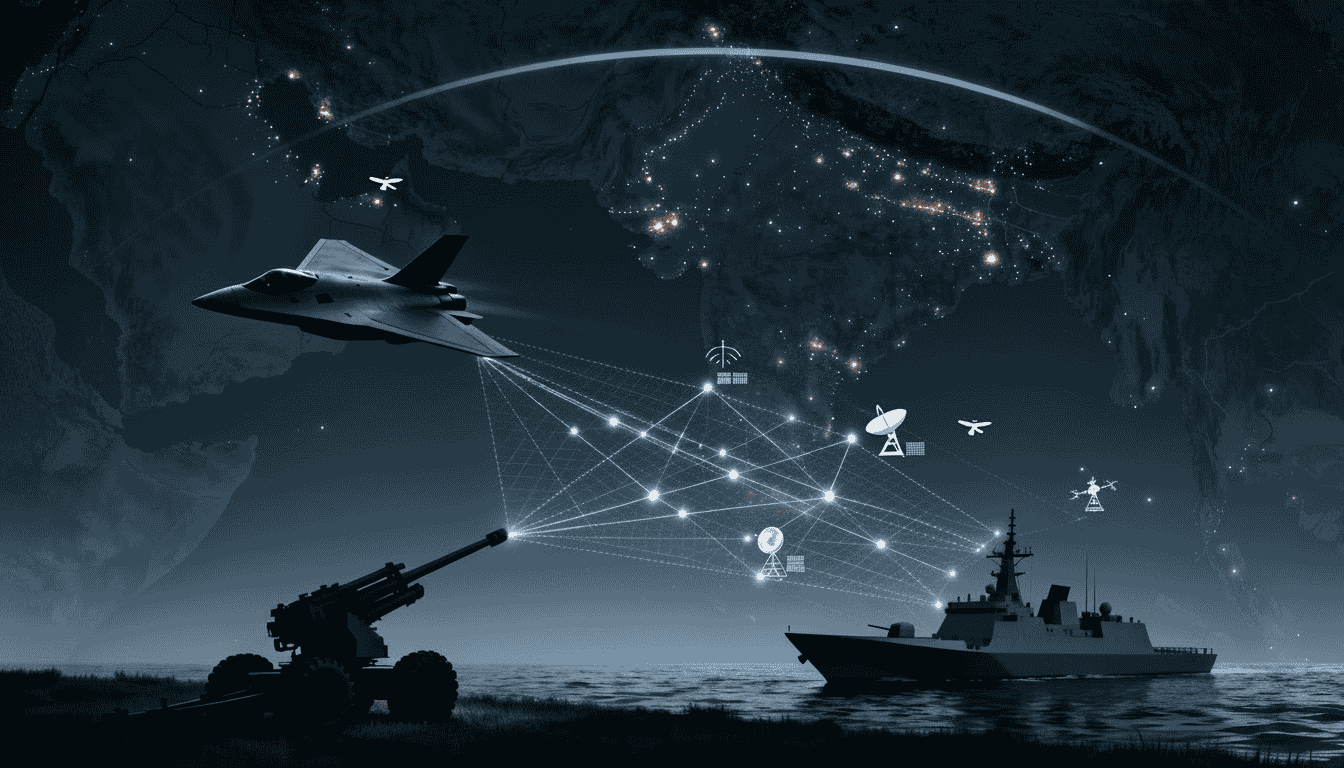
India’s Chief of Defence Staff (CDS), General Anil Chauhan, without qualification, acknowledged some tactical errors on Day 1 of the Indian Air Force (IAF) campaign of Op Sindoor. He was giving an interview to two international media houses. In what is seen clearly as a deliberate and calculated interview, on the sidelines of the Shangri-La Dialogue security forum in Singapore, he then went on to emphasise that quick lessons were learnt. IAF later went whole hog to precisely hit terror and military targets all across Pakistan and denuded its capability to wage war. In fact, within just 90 hours of air operations, Pakistan capitulated and was forced to seek an unconditional ceasefire. As DG Air Operations, Air Marshal AK Bharti said, losses are expected in combat, but what counts in the end is the success and victory. The winning side had seen much larger losses in many past campaigns around the world. IAF dominated the campaign, operated with impunity and hit a large number of targets with precision and effects, deep into Pakistan.
Militaries around the world go through detailed debriefs and derive lessons from each mission and conflict. Military history is taught in all defence academies. Since WWII, air power has dominated the means of waging war. There are lessons derived from Battle Damage Assessment (BDA) in both kinetic and non-kinetic attacks. The “Op Sindoor” air campaign has had the whole world analysing and reviewing how future air tactics and strategy will evolve.
Air Denial and Long-range Strikes
Op Sindoor and also the Russia–Ukraine conflict have thrown up the concept of air denial. Effective long-range AD systems forced both sides to keep their aircraft deep inside their own territories, far away from enemy SAM and AAM ranges. The role of AEW&C reduced as it was pushed further away from front-lines. To compensate, satellite-based ISR, navigation, and targeting became more important. India would require more low earth orbit (LEO) constellations for continuous monitoring of the battle zones.
Stand-off Air launched Cruise Missiles (ALCM) like BrahMos and SCALP, and ground-launched Loitering Munitions (LM) like Harop and SkyStriker, and other drones gained operational importance. Inventories of these would have to be increased and indigenous production propped up. Smaller FPV drones have seen great success in Ukrainian strikes against strategic air assets (bombers). Such innovative out-of-the-box techniques would be beneficial.
Counter Surface Force Operations (CSFO) needs a new look. Fighter aircraft and attack helicopters engaging in CSFO in Tactical Battle Area (TBA) will be sitting ducks for mobile air defences. This job will now have to be done by stand-off weapons.
Mobile AD Systems Gain Importance
AD systems are not only important but their being mobile is even more imperative. “Shoot and scoot” will have to be resorted to. Longer ranges will be the ultimate USP. Modern AD systems must evolve beyond traditional platforms. This will need to counter a spectrum of threats which include high-speed aircraft and cruise missiles, slow-moving drones, rockets, long-range missiles, ballistic missiles, hypersonic projectiles, and emerging near-space threats. India will have to adopt layered and tiered hard-kill systems alongside soft-kill mechanisms, including Directed Energy Weapons (DEW). There will be a need to enable Active Denial and A2/AD by integrating ground- and air-launched AD platforms and strike weapons.
To neutralise adversary AD systems, assets in space and other intelligence means must rapidly update locations of adversary AD systems for SEAD/DEAD and also plan safe routes for own aerial packages. Both hard-kill and electronic jamming means need to be extensively employed. India will need to saturate enemy AD systems with a mix of strikes by drones, anti-radiation missiles, cruise and hypersonic missiles, among others. Civil Defence measures need to be activated more often.
Missile Advantage
India has a clear advantage in type and numbers of SAMs. The S-400 and Akash AD systems have performed well. Considering the two-front threat, should India seek more S-400 SAMs from Russia? In the meanwhile India must accelerate its own DRDO LRSAM project “Kusha” that will be able to track stealth aircraft and have a range of 400 km. If Pakistan has actually got the original Chinese variant of PL-15 (180 km range) AAM, India must accelerate its own Astra 2 (175 km) and Astra III (350 km) programmes. Russia has been open to selling R-37M (200 km) AAM. India could acquire the same.
Electronic Warfare Aircraft
Pakistan has three Falcon DA-20, four Chinese turbo-prop ZDK-03, and one Bombardier Global 6000 dedicated Electronic Warfare (EW) aircraft. While all Indian fighters have electronic warfare suits, there are no dedicated EW aircraft with much more powerful jamming systems. India would also have to analyse in detail the performance of Rafale’s SPECTRA EW suite, and similarly those of other fighters.
EW is now central to all conflict theatres. They have been very successful in the Ukraine conflict. It must evolve into hybrid, cognitive, and smart systems that combine SIGINT, active decoys, and latest jamming capabilities. Need to invest in quantum sensors, self-protection suites, electromagnetic pulse (EMP) weapons. Also invest in anti-jam technologies and miniaturisation. India must seriously consider having a few dedicated EW aircraft.
Secure Data links and Encrypted Radio
In a net-centric warfare, every platform, sensor, and weapons system must be connected through very secure data-links. Pakistan is known to have been better off in this. India must keep moving up in the technology chain on this count. Similarly, secure jam-resistant radio is critical. Seamless information sharing can allow stealthy attacks with attacker radar and transmitters remaining silent and the weapon being updated through satellite or far-off platforms to achieve long-range, cross-domain kill chains.
Drones and Counter-UAS
Drones, particularly attritable (relatively inexpensive and replaceable) and swarm variants, will dominate future operations, especially for SEAD/DEAD roles. The Pakistani drone strike, even though not effective, comprised nearly 400 drones. Repeat strikes of this and larger magnitude would mean larger drone inventories. Longer-range pin-point targeted kamikaze drones will be more effective. To cater to supply chain dynamics, these must be fully produced in India. The country must have surge production capacities. The Russia–Ukraine war has seen nearly 2 million drones used every year. We need to master core technologies for indigenous mass production.
Procurement Procedures and Priorities
India needs to have a fresh look at the Integrated Capability Development System (ICADS) to ensure long-term resilience and reduce future emergencies. India should not be forced into knee-jerk procurements. User-industry interaction has to be a continuous process. Defence Acquisition Procedure DAP-2020 is under revision. Lessons of Op Sindoor should be incorporated before finalising DAP-2025. Operations branch of Service HQs must continue to have power for fast-track procurements to meet emergent requirements.
Multi-Domain Operations (MDO)
Modern warfare demands integrated, real-time, and resilient Multi-Domain Operations (MDO). It requires secured communication networks with last-mile connectivity across land, sea, air, and space. There is a need for inbuilt redundancy. The three services are networked, but still more needs to be done, and done quickly. Software-defined Radios (SDR) and quantum-resistant cryptography are required for network security. Distributed network architectures will support balanced jointness with cyber-security. Sensor proliferation among satellites, near-space platforms, manned platforms, UAS, ground/maritime sensors, OSINT, HUMINT, will ensure battlespace transparency. These must be fused and processed by edge compute devices with AI-enabled high performance. Cyber, AI and robotics need to be exploited. MDO must reduce ambiguity and accelerate the OODA loop.
Space Remains Key for Operations
To ensure tactical and strategic advantage, India must plan a sub-30-minute satellite revisit rate. Space sensors need to incorporate ELINT, COMINT, SAR, EO/IR, AIS, SSA payloads to effectively monitor and thus counter rapid deployment of AD systems and other forces. India needs satellite manoeuvre warfare capabilities in orbit. More dual-payload satellites, especially for MEO and GEO constellations, are required. Additional funding may be required for the space domain in the next ten years to transform ISR, communication, and PNT capabilities.
Space-based navigation and targeting has gained greater significance. NavIC (Navigation with Indian Constellation) is India’s own satellite-based navigation system developed by the Indian Space Research Organisation (ISRO). It provides real-time positioning, navigation, and timing services across India and a 1,500 km radius beyond its borders. Currently seven of the planned 11 satellites are operational. The system needs early operationalisation and accuracy needs further improvement. The Indian military also has to prepare for operations in GNSS-denied environments.
Decoupling Terror and Nuclear Threat
Operation Sindoor demonstrated the effectiveness of calibrated airpower as a principal instrument of national response to cross-border terrorism. The swift, proportionate response ensured escalation control. Large-scale strikes against military targets, including strategic assets, were managed with diplomatic and military finesse. Clearly the Pakistani threat of use of nuclear weapons at the slightest instance has been called rhetoric-based bluff. It has put in place a new normal.
China–Pakistan–Turkey Nexus
Despite the huge trade benefit that China derives from the large Indian market, Pakistan remains China’s deepest friend. Pakistan uses China as insurance against India, and China plays Pakistan to keep India engaged on the western border. China’s support is also to keep reminding India not to get too close to the USA. Eighty percent of Pakistan’s defence hardware is of Chinese origin. Highest cooperation is in aerospace with J-10CE and JF-17 being key aircraft programmes. SAMs and aerial missiles (PL-12, PL-15) are another important area. The two exercise regularly to improve interoperability. Chinese operational technical teams are in Pakistan to support their hardware. They are there to make the hardware succeed or at least be seen in a good light. Chinese satellites provide secure communications, ISR, navigation and targeting information. China supported Pakistan in command and control. China gives great support in electronic warfare and cyber-attacks. China supported Pakistan in the multi-sensor cooperative interception that purportedly shot some Indian fighter aircraft. China will continue to support Pakistan for decades ahead. India must factor this and build capability accordingly.
Turkey and Pakistan work closely in aerospace. Turkey supported Pakistan for F-16 upgrade and its spares. Pakistan wants to partner in Turkey’s fifth-generation aircraft “Kaan”. The two countries work closely in UAVs and drones. Immediately after the Pahalgam terror attack, Turkey began a surge supply of drones. Expect Turkey to increase such support in the future and plan accordingly.
Information Warfare
With instant connectivity, the information flow is rapid. In the highly polarised and surcharged nationalistic nature of the information space during conflict, narratives are built and perpetuated to spread facts or falsehoods to show success of one’s own campaign. It is also important to showcase own military hardware in a positive light while attributing failures to adversary systems. Many countries have specially trained “Information Warriors” backed by technical teams who generate graphics to add authenticity. Also in the narrative game are friendly or adversary foreign countries, and weapons manufacturers whose platforms are at play, among many others. Disinformation floods social media. The quick to hit the keyboard have the first-mover advantage. There are dedicated teams that replicate and multiply the narrative. Pakistan Army’s Inter-Services Public Relations (ISPR) has been very active. They know that the only way for them to win the war is through narrative. Democratic India has been a slow learner but is catching up. Many Western analysts and some governments are not particularly enthused by seeing a rising India. They continue to report with a colonial bias. Some governments get respected international analysts on their payroll to write in their favour. It is perhaps time for the National Security Advisor (NSA) to have a dedicated information warfare team to shape global and national opinion.
The fact that significant numbers of PL-15 air-to-air missiles fired from either J-10CE and/or potentially JF-17 fighters landed intact in India, indicates missile failure or inflated firing-range figures. Yet Chinese media was quick to claim their success without any proof whatsoever. That Indian strikes went through without interception speaks poorly of Pakistani HQ-9 and other air defence systems. These, and the accuracy of Indian strikes, are the narratives India should have pushed and not let the world concentrate only on the loss of Indian aircraft. In fact, more needed to be said about the Pakistani aircraft losses, a narrative that came much after the ceasefire.
It is time to have a national strategic communication doctrine. Need to introduce study of military history and Kautilyan statecraft into education, media, and policy. Cultivate silent digital warriors who shape opinion subtly but powerfully. Assert our victories unapologetically as mature acts of sovereignty, not jingoism. Let us unite soldier, scholar, coder, and communicator into a hybrid warrior ethos.
Atmanirbharta Mastering Key Technologies
Air superiority in the 21st century requires stealth, advanced sensors, and networked lethality. Pakistan and China are already working details to transfer the J-35A fifth-generation aircraft. The process has got accelerated during Op Sindoor. India’s home-grown AMCA is still far. India needs to accelerate the process. India may adopt a two-pronged strategy. In the short term, acquire fifth-generation fighter capabilities through imports or collaborative development of next-gen platforms with trusted partners. Finally, work on the fully indigenous AMCA programme with full-spectrum combat capability. Indian defence industries should work towards developing “Brand INDIA.”
India must simultaneously bolster defensive counter-stealth systems such as VHF radars, Passive Surveillance Systems, ROTHR (Relocatable Over-the-Horizon Radar), near-space and space-based surveillance, quantum sensor development, CATS (Combat Air Teaming System) and loyal wingman drones. Since India is working on hypersonic BrahMos II, the day may not be far when China gives Pakistan hypersonic missiles. There is a need to accelerate indigenous development of hypersonic technology. There is huge action and future in Directed Energy Weapons (DEW). Survivability has to be inbuilt in design. Capability to operate in denied and degraded environments.
Fresh Doctrinal and Tactical Approach
Continuous tactical and doctrinal changes are required to imbibe new technologies and evolve out-of-the-box combat solutions. Need to look at operational scenarios both with and without fifth-generation platforms. Foster interoperability between 4.5 Gen and fifth-gen aircraft through advanced data links, shared EW packages, and joint mission training. Networked operations across platforms will be the new normal. These require high-speed, secure data-links, potentially space-based. These must allow for sensor-to-shooter coordination and enable cooperative jamming, and missile guidance by remote assets. There is a need for a relook at HR policy to create and use operational specialisation.
Rethinking Theatre Commands
The joint staff at the Integrated Defence HQs has been working on the Integrated Theatre Commands (ITCs), where operational control will rest with theatre commanders rather than the traditional service chiefs, who will retain responsibility for “raise, train, and sustain” (RTS) functions. The practical experience in Op Sindoor has been much more complex and different. This operation, and the Ukraine conflict, have demonstrated the primacy of air power and the strategic necessity of centralized command for limited aerial resources. Decision making and resource allocation were all happening in New Delhi. Even target systems were being evolved in consultation with various agencies. The operational jointness was adequately visible at Service Chiefs levels. Rushing into implementation without resolving these fundamental issues risks creating a system that looks integrated on paper but is fragmented in practice. Will a theatre with limited assets enhance war-fighting capability? Can a theatre commander be given the extent of freedom of assets and operations currently? Fragmenting these scarce resources among multiple theatre commands could drastically reduce their operational effectiveness and weaken national-level response capability. India is a highly threatened nation. Premature implementation would be risky. There is a need for strategic reassessment.
To Summarise
Op Sindoor has been a spectacular victory for India. For all practical purposes India has fought a single-front war but with the combined might of two. There have been valuable lessons that, once imbibed, can accelerate victory and make it more complete. We need not only battlefield victories but also dominance in the information and narrative spheres, ensuring our military successes translate into enduring national strength. Focused, fearless action drives real power. Aerospace will remain the domain of action.
The framework outlined above is highly agile and scalable. Modernisation, grounded in technological foresight and strategic clarity, is imperative. India must be decisively proactive in capability development to anticipate, deter, and decisively counter the full spectrum of threats. India’s rising economic muscle will ensure funding. Sustained funding for R&D and procurement, and developing indigenous technologies, is a must. The new advanced systems must be integrated seamlessly. It is also time for reforms in DRDO, acquisition processes, and public–private partnership. Recommendations of many committees need to be implemented on priority. Battlefield-driven innovations are important. Indigenisation and Atmanirbhart require continuous push and review. Technology-driven operational doctrinal reviews are required. Conflicts will start from trigger events. Capability has to be in place at all times. Time to Act is Now.
Note: The article was originally written by the Author for The EurAsian Times on June 8th, 2025, it has since been updated.
Header Picture Credit: Author
Twitter: @AirPowerAsia
 Air Power Asia
