
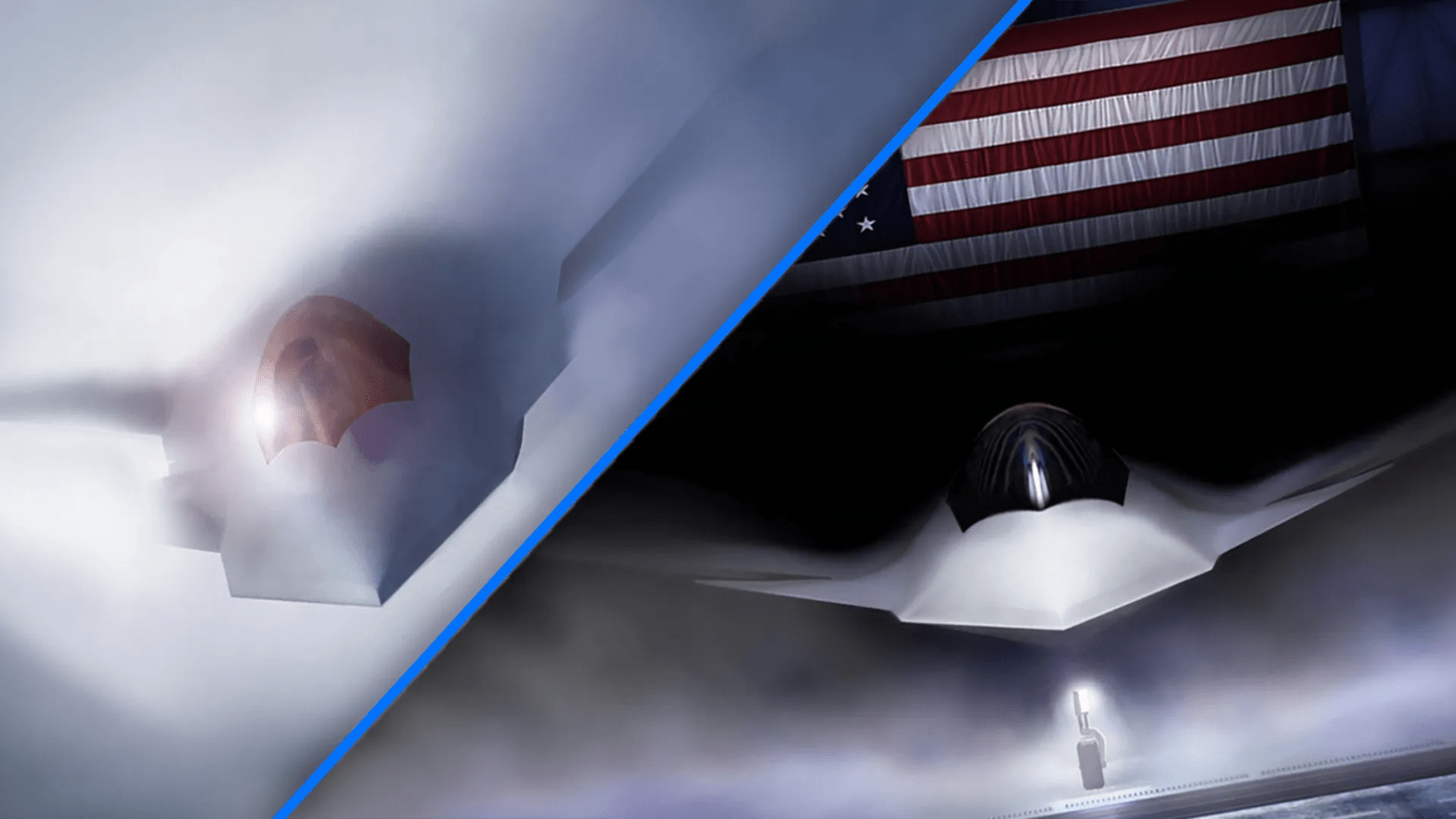
The Next-Generation Adaptive Propulsion (NGAP) program is a U.S. Air Force (USAF) initiative to develop advanced, adaptable jet engines with features like enhanced fuel efficiency, increased thrust, improved thermal management, and better survivability for future combat aircraft, such as the Next Generation Air Dominance (NGAD) fighter, now also known as the F-47. Pratt & Whitney and General Electric Aerospace are competing to produce these state-of-the-art engines, with XA103 and XA102 prototypes, respectively, leveraging technologies from the earlier Adaptive Engine Transition Program (AETP).
The program aims to provide a propulsion system that can dynamically change its characteristics in flight to suit mission needs, rather than being fixed for a single operational point. The adaptive architecture allows components to adjust for optimized fuel efficiency or high-thrust modes. A “third stream” of cooled air is introduced to improve thermal management and propulsion efficiency. Advanced features ensure performance and survivability in challenging environments. There will be a significant improvement in fuel consumption efficiency compared to previous generations. The technology aims to provide the range, weapon capabilities, and persistence required for future air dominance platforms.
Both companies are in the detailed design and analysis phase, have completed key design reviews, and are now fabricating and testing prototype ground demonstrators, with testing expected to continue through the late 2020s. Although originally intended to power the manned NGAD fighter jet, the program’s scope is adaptable to other future military aviation needs. The USAF has increased funding for the program to support continued design, testing, and prototype development.
Adaptive Cycle Engine Technology
The Next Generation Adaptive Propulsion (NGAP) program is a USAF initiative to develop advanced adaptive cycle jet engines for next-generation combat aircraft. These engines are designed to provide a revolutionary leap in performance by dynamically adjusting their airflow to optimize for either maximum thrust or maximum fuel efficiency. Unlike fixed-cycle engines, which are optimized for a single performance point, adaptive engines feature a third stream of airflow that can be used to achieve different modes of operation.
In the high-thrust mode, the third air stream is closed off, and all airflow is directed through the core of the engine, similar to a traditional fighter jet engine. This provides maximum power for take-off, acceleration, and combat. In the high-efficiency mode, for long-range cruising, the engine opens the third stream of cooled air, improving fuel efficiency by increasing the engine’s bypass ratio. This flexibility allows a single engine to provide the power required for high-speed combat as well as the fuel efficiency needed for long-endurance missions, offering a significant advantage over previous-generation engines.
The NGAP program aims to deliver several key advancements beyond increased thrust and fuel efficiency. Thermal management is critical for next-generation aircraft that produce enormous amounts of heat, which must be withstood by advanced metals and materials. The program relies heavily on digital engineering processes, using advanced design models to accelerate development, improve collaboration with suppliers, and enhance manufacturing efficiency. NGAP technologies are being developed with advanced survivability in mind, incorporating features to improve the aircraft’s stealth characteristics and resilience in contested airspace. The engine is being designed with a flexible, modular architecture that can be adapted for various future combat aircraft, not just a single airframe.
Adaptive Versatile Engine Technology (ADVENT)
The ADVENT program is one of several related development projects pursued under the Versatile Affordable Advanced Turbine Engine (VAATE) program. After being announced in April 2007, Rolls-Royce (RR) and GE Aviation were awarded Phase I contracts in August 2007 to explore concepts, develop and test critical components, and begin preliminary engine designs. In October 2009, RR was awarded the Phase II contract to continue component testing and integrate developed technologies into a technology demonstrator engine. GE Aviation was also awarded funds to continue development of its demonstration core, despite the program originally calling for a single Phase II contractor.
The ADVENT program was an aircraft engine development effort run by the USAF with the goal of developing an efficient adaptive or variable cycle engine for next-generation military aircraft; initial demonstrators were expected in the 20,000 lbf (89 kN) thrust class. In 2012, the program was succeeded by the Adaptive Engine Technology Demonstrator (AETD) program, with work continuing in 2016 under the Adaptive Engine Transition Program (AETP), which focused on developing and testing a 45,000 lbf (200 kN) thrust class adaptive cycle engine for potential F-35 re-engining.
The NGAP was launched for a related 35,000–40,000 lbf (156–178 kN) thrust class engine to power the NGAD crewed fighter aircraft. Specific goals included reducing average fuel consumption by 25 percent and reducing the temperature of cooling air produced by the engine. Pratt & Whitney has funded an adaptive fan variant of its F135, which may qualify for follow-on adaptive engine development under USAF research programs.
The ADVENT engine was originally targeted for the USAF’s Next-Generation Bomber, but uncertainty in that program led RR to assess that the engine would be better suited for a potential F-35 upgrade. RR, partnered with GE on the F136 alternate engine, argued that ADVENT-related contracts strengthened the case for continuing alternate engine development. The technologies were also intended for future sixth-generation fighter programs, including Penetrating Counter Air (PCA), NGAD, and the US Navy’s F/A-XX.
Delays in the US Next-Gen Engines
The USAF is facing a delay of over two years for next-generation prototype engines meant to power the forthcoming Boeing F-47 stealth fighter. The program is now not expected to complete before fiscal 2030. Earlier FY25 budget documents had indicated completion by Q4 FY27, but FY26 documents released in June shifted the timeline to Q2 FY30, citing supply chain challenges. Upcoming milestones include completion of an Assembly Readiness Review, intended to finalize build and testing schedules. Production of prototype engine parts began in July 2025.
GE Aerospace stated that it “is executing the NGAP contract schedule as proposed” and has expressed confidence in possible acceleration. Pratt & Whitney similarly confirmed successful execution of the program while working closely with suppliers and leveraging advanced digital design models to streamline manufacturing and inspection.
Following a new round of NGAP contracts, the USAF raised the award ceiling to $3.5 billion per vendor. The Air Force is expected to eventually select one NGAP contender. Given the aggressive timeline to fly the F-47 before the end of President Donald Trump’s term, a fully mature next-generation engine may not be available for early aircraft.
Operational Implications
Adaptive cycle engine capabilities are especially relevant in a potential large-scale conflict in the Indo-Pacific, where aerial refuelling assets may be increasingly vulnerable and forward bases limited. These engines will be far more efficient than the existing F135, offering greater range for the same fuel load. Derivatives will power uncrewed platforms under the Collaborative Combat Aircraft (CCA) concept, with several technologies expected to be portable across programs.
Adaptive propulsion is key to enabling future air dominance requirements, including range, weapons carriage, sensor capability, and persistence. The high-efficiency mode may enable the USAF’s goal of achieving a combat radius approaching 1,000 nautical miles for the F-47, compared to approximately 590 nautical miles for the F-22. While the F-47 is expected to exceed the F-22 in stealth, engine heat remains a vulnerability against infrared search and track (IRST) systems and infrared-guided missiles. The engines must also support Mach 2+ performance and generate sufficient electrical power for advanced avionics, electronic warfare systems, and future directed-energy weapons.
India’s Indigenous Engine Must Be Adaptive
The United States maintains a clear lead in advanced fighter engine technology, particularly adaptive cycle designs. China’s J-20 began receiving domestically produced WS-15 engines only in 2023, and Chinese adaptive engine development remains some distance from operational maturity.
India’s proposed 120 kN indigenous turbofan engine, to be developed by DRDO in partnership with Safran, follows a similar timeline and must incorporate adaptive cycle engine technology. These digitally controlled engines are expected to adjust in flight for either higher power or improved fuel efficiency and are intended to power the Advanced Medium Combat Aircraft (AMCA).
This program represents a major step toward strategic autonomy, with Safran committing to 100 percent technology transfer, including single-crystal blade technology and full intellectual property rights (IPR). The project is expected to span approximately 12 years, involving the development of nine prototypes, beginning at 120 kN and potentially scaling to 140 kN thrust. Beyond meeting India’s future fighter requirements, the initiative aims to build long-term national capability in engine design and manufacturing, with potential export and industrial benefits. The time to push this program decisively is now.
Note: The article was originally written by the Author for The Eurasian Times on, October 6th, 2025, it has since been updated.
Header Picture Credit: TWZ
Twitter: @AirPowerAsia
 Air Power Asia