
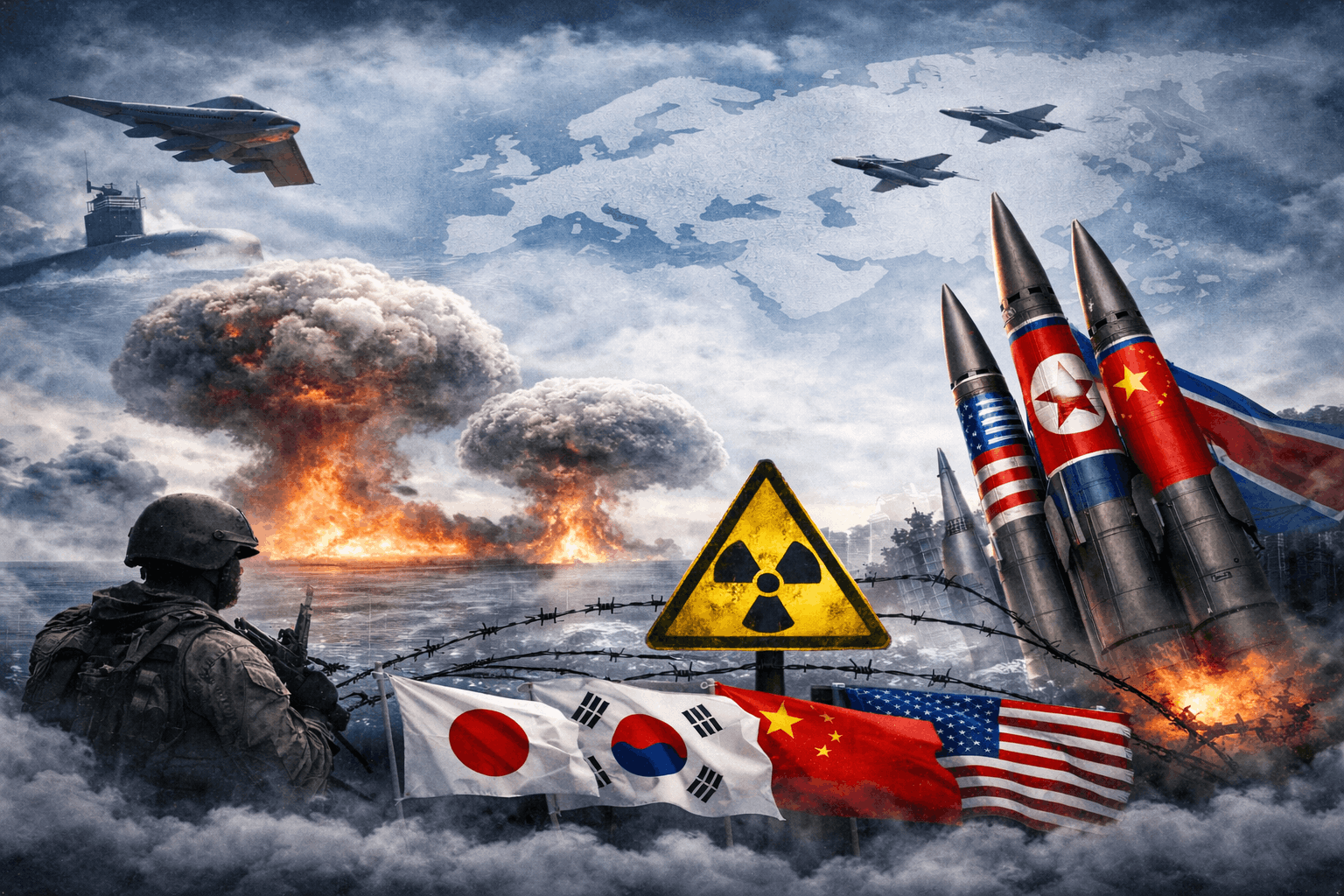
Ukraine voluntarily renounced its vast Soviet-era nuclear arsenal after independence, transferring all nuclear warheads to Russia by 1996 in exchange for security assurances via the 1994 Budapest Memorandum from the US, UK, and Russia, but now deeply regrets this decision following Russia’s 2014 annexation of Crimea and the 2022 invasion, which it calls broken promises. Nine countries possess nuclear weapons: the United States, Russia, France, China, the United Kingdom, Pakistan, India, Israel, and North Korea.
South Africa, under President F.W. de Klerk, voluntarily dismantled its nuclear weapons program in the late 1980s/early 1990s, becoming the only nation to develop nuclear weapons and then surrender them, driven by changing regional dynamics (Soviet withdrawal, Namibian independence) and the economic burden of apartheid. This move, formalized by joining the Non-Proliferation of Nuclear Weapons (NPT) in 1991, ushered in a new era of non-proliferation, leading South Africa to become a strong global advocate for nuclear disarmament and a party to the Treaty on the Prohibition of Nuclear Weapons (TPNW). Former Soviet Republics, Ukraine, Kazakhstan, and Belarus inherited Soviet nuclear weapons but gave them up for security assurances. Meanwhile, Germany, Italy, Turkey, Belgium, and the Netherlands host US nuclear weapons.
Though ideally the world should be made nuclear weapons-free, geo-political realities indicate that not having nuclear weapons is today considered a potential security liability as it leaves non-nuclear states vulnerable to nuclear-armed adversaries, creating a security dilemma where deterrence through possession conflicts with global disarmament goals, prompting calls for verifiable disarmament or “No First Use (NFU)” policies to lower risk.
81 years after the atomic bomb was first used, a second nuclear weapons arms race has begun, and every nation that possesses nuclear weapons is either expanding or upgrading its nuclear arsenal. Nuclear weapons are becoming smaller, more accurate, and countries are developing tactical weapons, alongside strategic arsenals. Those with technical and financial means are wanting to possess nuclear weapons for security reasons.
German Nuclear Weapon Program in WW II
During WW II (1939) Germany’s nuclear program, the “Uranverein” (Uranium Club), launched shortly after nuclear fission was discovered, failed to produce an atomic bomb due to underfunding, shifting priorities, scientific disagreements, and Allied sabotage, despite top German physicists like Werner Heisenberg and Otto Hahn being involved in early research into fission. While they made strides in reactor design, they never achieved a sustained chain reaction or sufficient uranium enrichment, focusing more on civil applications and other weapons as the war progressed. German scientists struggled with graphite purity (boron contamination) and faced difficulties with heavy water production (sabotaged in Norway). Heisenberg also believed that a bomb was impractical due to mass requirements. Nazi focus was on V-2 rockets and conventional weapons over the bomb. By the war’s end, Allied intelligence (Alsos Mission) confirmed Germany was far from an atomic bomb, capturing scientists and materials.
Evolution of Nuclear Weapon States
The evolution of nuclear weapon states began with the United States going nuclear (1945) during WWII. The Soviet Union (1949) broke the US monopoly, accelerating global proliferation. The United Kingdom (1952) tested its first independent bomb. France (1960) developed its own nuclear capability. China (1964) achieved nuclear status with initial Soviet help. India (1974) conducted its first nuclear test “Smiling Buddha”, declaring it peaceful but signalling bomb capability. Pakistan (1998) tested nuclear weapons in response to India, achieving parity. Pakistan’s nuclear capability was developed through a combination of indigenous scientific effort, the acquisition of sensitive technology through clandestine networks, and significant assistance primarily from China.
Israel, believed to have acquired nuclear weapons around 1967 but maintains a policy of deliberate ambiguity, neither confirming nor denying. North Korea (2006) achieved nuclear weapons status after withdrawing from the NPT. North Korea’s nuclear capability stems from early Soviet assistance for peaceful nuclear energy, which evolved into a weapons program with technical help and materials potentially sourced from Pakistan (A.Q. Khan Network).
Disarmament & Non-Proliferation Efforts
Disarmament and non-proliferation efforts focus on reducing and eliminating weapons, especially Weapons of Mass Destruction (WMD) like nuclear arms, preventing their spread (non-proliferation), and controlling conventional weapons, with the NPT Treaty as the cornerstone, supported by treaties like the TPNW, international agencies like the IAEA, export controls, and initiatives like the Non-Proliferation and Disarmament Initiative (NPDI), all aiming for global peace and security through binding agreements, transparency, and verification. Reducing, limiting, or abolishing weapons, particularly WMDs, is the aim. Preventing WMD (nuclear, chemical, and biological) weapons technology from reaching new states or non-state actors is important.
The Non-Proliferation Treaty (1968) recognized the first five states as nuclear-weapon states. The main international NPT (1970) had three pillars: non-proliferation, peaceful use of nuclear energy, and disarmament. The TPNW, a newer treaty (2021), was to stigmatize and ban nuclear weapons. The Comprehensive Nuclear-Test-Ban Treaty (CTBT) aims to ban all nuclear explosions. The Fissile Material Cut-off Treaty (FMCT) is a proposed treaty to ban production of fissile material for weapons.
The IAEA verifies NPT compliance through safeguards. The United Nations (UN) works on disarmament through various bodies, addressing WMDs, conventional arms, and emerging technologies. The NPDI is a group of states pushing for practical disarmament steps. Groups like the Nuclear Suppliers Group (NSG) control sensitive technology exports.
The key US–Russia nuclear treaty is New START, extended until February 2026, limiting strategic warheads to 1,550 and delivery systems to 700, with verification measures like inspections. However, the Intermediate-Range Nuclear Forces Treaty (INF Treaty, 1987) collapsed after US withdrawal (2019) and Russia’s subsequent cessation (2025). Russia also suspended participation in New START in 2023, leaving the relationship in a precarious state with future talks uncertain. China has chosen not to be part of any of these discussions and continues to modernise and expand its nuclear capability.
Prospective Nuclear Weapon States
Prospective nuclear weapon states are nations like Iran, Saudi Arabia, Turkey, South Korea, Japan, and Egypt, which are often driven by regional threats or a desire for greater security. Some possess the technical capacity or are facing geo-political pressure to develop nuclear arms. Japan is technologically capable but committed to non-proliferation, while Iran is closely monitored for enrichment, and states like Saudi Arabia are exploring nuclear energy. Key factors include nuclear latency (technical ability), geopolitical tensions, and existing nuclear infrastructure, with countries like South Korea and Japan possessing advanced nuclear power and potential for rapid weaponisation.
Iran has advanced nuclear enrichment capabilities and has faced scrutiny from the IAEA, though officially its weapons program is suspended; it could potentially build a weapon quickly if it chose to. Saudi Arabia is investing heavily in nuclear energy and has discussed nuclear ambitions, potentially seeking technology or even weapons from partners like Pakistan. Turkey is developing nuclear power and has expressed interest in nuclear capabilities, though it is hosting US nuclear weapons under NATO’s nuclear sharing. Egypt is also exploring nuclear energy and infrastructure development for potential nuclear ambitions.
South Korea & Japan possess advanced nuclear technology and infrastructure, making them “nuclear-latent” states capable of developing weapons if security concerns escalate, but are firmly non-nuclear powers currently.
Factors Driving Proliferation
Regional instability and perceived threats from rivals (e.g., in the Middle East or East Asia) push nations to seek nuclear deterrence. Availability of nuclear technology and expertise will make it easier for some states to transition from civilian power to weapons programs. Erosion of treaties and weakening global norms against nuclear proliferation may embolden states to pursue weapons. Japan can reportedly build a weapon within a year but is a strong non-proliferation advocate. South Korea had clandestine research and possesses the technical know-how. Taiwan is believed to have designed nuclear devices, though it has strong US security guarantees. While many countries have the ability to go nuclear, only a few are actively considering or preparing for it due to geopolitical shifts.
Why Japan Could Go For Nuclear Weapons
Japan is the only country that has been the victim of the atomic bombing of Hiroshima and Nagasaki. Seeing the suffering, the Japanese had chosen not to go nuclear. Japanese “pacifist budgeting” traditionally meant low defence spending, but recent threat perception from China, which has been making aggressive forays towards Taiwan and contested Japanese Islands, has led to a change. Article 9 of Japan’s constitution renounces war and the use of force, prohibiting a traditional military, yet Japan maintains Self-Defence Forces (SDF) under an interpretation of “exclusively self-defence.” There is a shift towards military strength due to regional threats, moving away from the post-war 1% of GDP cap towards a goal of 2% of GDP.
Japan may pursue nuclear weapons primarily due to a worsening regional security environment and potential doubts about the reliability of the US “nuclear umbrella” for its defence. The motivations for going nuclear stem from regional threats and the growing military and nuclear capabilities of neighbouring countries, particularly China, North Korea, and Russia. North Korean missile tests and aggressive rhetoric from China have heightened security concerns.
There are serious doubts about what Japan has long relied on: the US security guarantee, known as “extended deterrence” or the “nuclear umbrella”. Concerns exist that the US might not risk a nuclear conflict over issues far from its own homeland, leading some Japanese strategists to argue for an independent deterrent to ensure national survival. While public opinion has historically opposed nuclear weapons due to the legacy of the Hiroshima and Nagasaki bombings, some politicians within the ruling Liberal Democratic Party (LDP) have increasingly suggested that Japan should discuss or even acquire nuclear weapons to address security realities.
Japan is considered a “latent nuclear power,” meaning it already possesses advanced technology, significant stockpiles of separated plutonium, and scientific expertise to produce a basic nuclear arsenal relatively quickly, possibly within one to three years, if a political decision were made to do so.
Despite these motivations, several factors make a Japanese nuclear arsenal unlikely in the near future. Firstly, Japan is a signatory to the NPT, which prohibits it from possessing nuclear weapons. Pursuing them would violate its international commitments and may result in diplomatic isolation and international sanctions. Secondly, a strong anti-nuclear public sentiment remains deeply ingrained in Japanese society, rooted in its unique experience as the only country to have suffered wartime nuclear attacks. Thirdly, developing nuclear weapons would likely provoke regional arms races, particularly with North Korea, and further inflame tensions with China, potentially leading to a less stable security environment overall. All these can be circumvented. And the world may not react as feared. Japan’s deterrence capabilities will initially be focused on China and North Korea, it is supposed.
South Korea and Nuclear Weapons
South Korea currently has no official plan to develop nuclear weapons, but President Yoon Suk-yeol’s comments in 2023 sparked debate, suggesting it as a possibility if North Korean threats escalate, given its strong nuclear technology capacity and missile programs, including nuclear-powered submarine (NPS) development with the US as part of enhanced deterrence, reflecting growing regional security concerns despite heavy political/legal hurdles and US non-proliferation commitments. Earlier, Seoul had abandoned a secret nuclear program in the 1970s due to US pressure and signed non-proliferation agreements, but renewed regional threats fuel debate over these constraints.
Seoul’s technological ability, including advanced nuclear infrastructure, fast reactor construction, and missile tech (like Hyunmoo-V), allows rapid nuclear weapon development if political will changes. Developing tactical nukes or requesting US deployments has triggered debate but was quickly clarified as not an immediate plan, signalling a shift in rhetoric. The US–ROK Alliance discussions focus on extended deterrence (US nuclear umbrella) and enhancing conventional capabilities, including NPS, which South Korea is building with US cooperation for greater strategic reach.
To Summarise
Nuclear weapons possess a high deterrence value by creating a credible threat of unacceptable retaliation, preventing large-scale conventional or nuclear attacks through the concept of Mutual Assured Destruction (MAD) and ensuring strategic stability by making the costs of aggression too high for any rational actor. This deterrence, including extended deterrence, enhances national prestige and sets an upper limit on conflict escalation, though it also raises ethical questions and doesn’t deter lower-level threats like cyber-attacks or terrorism.
With North Korea routinely testing ballistic missiles and firing them over and around South Korea and Japan, both are feeling coerced and threatened. Similarly, China’s war-game exercises around Taiwan are part of a campaign to counter growing international support for the island nation.
Beijing is trying to intimidate Tokyo into silence on Taiwan. But Japan is a major economy and a strong power with clear resolve. Japan is allocating much larger amounts in defence budgets. It has already started building and acquiring offensive weapons. Trump has left Europe to prepare for its own defence. The same could one day happen to Taiwan and Japan. Trump could even broker a deal with Russia or China that could impact extended security for Japan and South Korea. Between the two, Japan could be the first to acquire nuclear weapons to act as deterrent.
Meanwhile, showdown in Venezuela continues as Russian, Chinese, and Indian tankers are awaiting loading oil shipments. The globalization of trade has taken a back seat after Trump imposed tariffs and sanctions on many countries, especially Russia, China, and India.
Any nuclear proliferation will be bad for the world. More nations having WMDs will increase the risk of nuclear showdown or use. The world is going through a period of muscle-flexing. The USA is again on a rampage with an expansionist mood. After control of Venezuela, Greenland, Cuba, Colombia, and Iran are in his military’s “crosshairs”. The United Nations has been left helplessly pleading. Because of the US military strength, he is getting away. Clearly, it is giving “Might is Right” signals to the world. More nations will thus invest in greater military capability, and some will pursue nuclear weapons.
Note: The article was originally written by the Author for The First Post on 18th, January 2026, it has since been updated.
Header Picture Credit: Representative Image Generated using AI
Twitter: @AirPowerAsia
 Air Power Asia