
Pakistan-backed terrorists killed nearly 28 innocent holidaymakers at Pahalgam on 22 April in a Hamas-style terror attack. Links to Pakistani Inter-Services Intelligence (ISI) and the Pakistan Army were established early. Indian masses were angered and sought appropriate revenge. A slew of measures were announced by the Indian Government. India put the 1960 Indus Water Treaty (IWT) in abeyance. India closed the Integrated Check Post at Attari. Pakistani nationals will not be permitted to travel to India under the Saarc Visa Exemption Scheme (SVES) visas. Any SVES visas issued in the past to Pakistani nationals are deemed cancelled. Any Pakistani national currently in India under an SVES visa has 48 hours to leave India. The defence/military, naval and air force advisers in the Pakistani High Commission in New Delhi are declared persona non grata. India also decided to withdraw its own defence/navy/air force advisers from the Indian High Commission in Islamabad. The overall strength of the high commissions was to be brought down to 30 from the present 55.
A rattled, cash-strapped Pakistan reacted to India’s action over the Pahalgam terror attack. In rejection of India’s move to suspend the IWT, Pakistan warned that any diversion of water will be treated as an “Act of War.” It closed its airspace for Indian airlines and suspended all trade with the fifth-largest economy in the world. It also put on hold all bilateral treaties with New Delhi, including the 1972 Shimla Agreement. It pledged a full-spectrum national power response to any threat against Pakistan’s sovereignty. It put its armed forces on alert and began selective mobilisation. Most measures were quite expected. But by suspending the Shimla Agreement, it unwittingly handed over a big advantage to India.
What is the Shimla Agreement?
The Shimla Agreement between the Government of India and the Government of the Islamic Republic of Pakistan was signed on 02 July 1972 at Barnes Court (Raj Bhavan), Shimla, Himachal Pradesh, India, between then-Indian Prime Minister Indira Gandhi and her Pakistani counterpart, the late Zulfikar Ali Bhutto. It was ratified on 15 July 1972 (by Pakistan) and 03 August 1972 (by India) and became effective on 04 August 1972. The agreement had come in the wake of Pakistan’s comprehensive defeat in the 1971 War that split the country and created Bangladesh. Some Indian bureaucrats later argued that a tacit agreement to convert this LoC into an international border was reached during a one-on-one meeting between the two heads of government. Pakistani bureaucrats have denied any such thing. Nor was that acceptable to the Indian public.
The agreement stated: “The Government of India and the Government of Pakistan are resolved that the two countries put an end to the conflict and confrontation that have hitherto marred their relations and work for the promotion of a friendly and harmonious relationship and the establishment of durable peace in the subcontinent, so that both countries may henceforth devote their resources and energies to the pressing task of advancing the welfare of their peoples.” The agreement was meant to lay the foundation of a peaceful and stable relationship between the two nations. It was decided that the two countries are resolved “to settle their differences by peaceful means through bilateral negotiations or by any other peaceful means mutually agreed upon between them.”
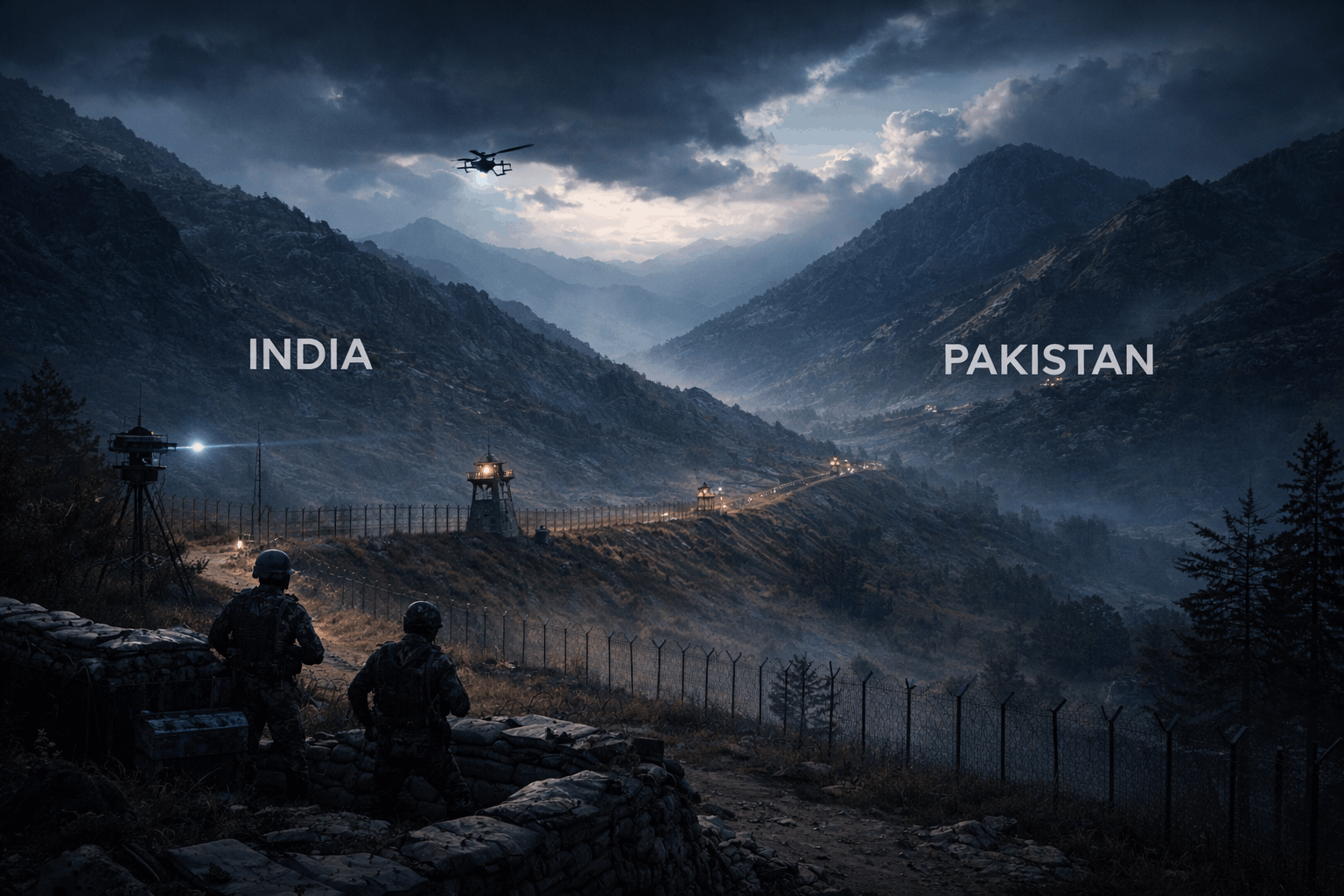
The treaty made it incumbent on the two sides to resolve all issues bilaterally and superseded the UN’s resolution on Kashmir. The agreement stressed that nations go back to the Line of Control (LoC) and respect it, making it a quasi-border between the two. LoC was earlier called the “Ceasefire Line.” The LoC now delinked it from the UN-imposed 1949 ceasefire line. The treaty clearly stated that the Indian and Pakistani forces shall be withdrawn to their respective sides of the International Border (IB). That, in Jammu and Kashmir, the LoC resulting from the cease-fire of 17 December 1971 shall be respected by both sides without prejudice to the recognised position of either side. Neither side shall seek to alter it unilaterally, irrespective of mutual differences and legal interpretations. India returned around 13,000 sq. km of land taken in battle on the western border but retained some strategic areas including Turtuk, Dhothang, Tyakshi, and Chalunka of Chorbat Valley, covering more than 883 sq. km, to create lasting peace. Both sides further undertook to refrain from the threat or use of force in violation of this Line. The fact that there has only been one limited war since the agreement was signed reflects its effectiveness. The agreement also resulted in Pakistan formally recognizing Bangladesh as a sovereign nation.
Both sides were to resolve all issues bilaterally. But Pakistan never respected this part of the treaty, taking matters to an international level, especially doing chest-beating on Kashmir at the United Nations (UN). The latest being Pakistan’s outcry over the Abolition of Article 370. One critical clause was that “both shall prevent the organisation, assistance or encouragement of any acts detrimental to the maintenance of peaceful and harmonious relations.” Pakistan has been engaging in cross-border terrorism as a foreign-policy tool to bleed India and foster separatism in Kashmir and to keep the Indian Armed Forces pinned down. Some of the major Pakistan-sponsored Islamist attacks against India included the Indian Parliament attack of 2001; the Akshardham Temple attack in Gandhinagar in 2002; Mumbai train blasts 2003; twin blasts at Gateway of India and Zaveri Bazaar, Mumbai 2003; Delhi bombings 2005; 2006 Mumbai train bombings; Jaipur bombings 2008; 2008 Mumbai attacks; 2016 Uri Brigade HQ attack; and 2019 Pulwama attack, among many others.
Implications of the Suspension
Pakistan thinks that by suspending the treaty it can once again take up all issues to the United Nations (UN) or other bodies and invite third parties to intervene in Indo-Pak disputes. But by suspending the Shimla Agreement, the sanctity of the LoC becomes open-ended. It will be possible for either side to unilaterally take advantage and try to violate it to gain ground. India, being more powerful militarily and otherwise, will gain the advantage. Pakistan had tried incursions across the LoC in 1999, resulting in the Kargil War, and Pakistanis were not only thrown out but also faced humiliating defeat and very high casualties. Earlier in 1984, Pakistan attempted to take control of the Siachen Glacier, an Indian territory demarcated by the Karachi Agreement. In response, India launched Operation Meghdoot in 1984, gaining full control of the glacier.
With suspension of the Shimla Agreement, New Delhi is free to use military options without violating any treaty. The military option could be many. India could proactively target terror camps across the LoC to slow or stop terrorist infiltration. India could regain territory in critical sectors, especially gains like the Haji Peer Pass that it had earlier frittered under international pressure. There are other sectors where India can create greater buffer zones to reduce threats to the Srinagar–Leh highway.
When the treaty was signed, Pakistan was in the good books of the West, particularly the USA, because the USA needed Pakistan for operations against the Soviet Union in Afghanistan. Things have changed ever since. Today the world is wooing India. India is a mature democracy and a powerful economy. It is a significant military power. Russia, Europe, the USA, the Arab World, and even China need India for economic reasons. India can now use the leverage it has over major powers, including the Trump Administration in the US, Putin’s Russia, Israel, and West Asian and European countries, to isolate Pakistan. It was encouraging to note that when the New York Times reported that the Pahalgam tourists were gunned down by “militants in Kashmir,” the US House Foreign Affairs Committee rectified the headline, referring to the gunmen as “Terrorists.” India’s ties with China are also improving, causing insecurity in Pakistan.
To Summarise
The agreement had not prevented the relationship between the two countries from deteriorating to the point of armed conflict in the Siachen Glacier or during the Kargil War of 1999. The prerequisite for reconciliation, good neighbourliness, and durable peace between the two has been breached repeatedly by Pakistan-sponsored terrorism. They were expected to refrain from the threat or use of force against the territorial integrity or political independence of each other; this too has been violated. The Pakistani Army has repeatedly vowed to avenge the humiliating defeat and surrender of 93,000 able-bodied soldiers, and “throwing peace into the wind.”
The progressive normalising of relations as envisaged by the treaty was not allowed to happen by the Pakistan Army, which has de facto run the country since 1947. The Pakistan Army’s power flows from the insecurity of the nation’s masses. Steps that were to be taken to promote travel, trade, and cultural relations kept seeing setbacks. Suspension of the treaty has raised concerns about the future of peace and stability in the region, especially regarding the LoC in Jammu and Kashmir. The suspension could potentially revive proxy warfare tactics that the Shimla framework aimed to curb. It may not have immediate tactical consequences but could open the door to greater diplomatic and military brinkmanship. Any revival of hostilities or border instability can derail developmental and democratic consolidation efforts in J&K post-Article 370 abrogation. The potential for conflict between two nuclear-armed states would raise alarms in the international community, prompting calls for restraint and dialogue.
India will be required to increase satellite and UAV surveillance and use more anti-drone systems. It will have to strengthen Counter-Infiltration Grids and further improve coordination between the Indian Army, Border Security Force (BSF), local police, and intelligence units. Foster community–police–military collaboration to build a “first line of alert.” There is a need to revisit and work on comprehensive border fencing and modernisation. The suspension of the Shimla Agreement provides India an opportunity to recalibrate its security and diplomatic strategies. It also strengthens the case for Pakistan’s re-listing in the Financial Action Task Force (FATF) grey list.
By disregarding the Shimla Agreement, Pakistan has done a great favour to India and PM Modi to reclaim Pakistan-occupied Kashmir, something that the entire political class of India would support. There will be retribution across the LoC. A long round of firing across the LoC itself will run the Pakistani economy aground. India has nearly $680 billion foreign exchange reserves; Pakistan’s are $15 billion. Pakistan cannot sustain a conflict. The extent of armed conflict will be graded. It is time to wait and watch as things unfold.
Note: The article was originally written by the Author for Russia Today on 7th, May 2025, it has since been updated.
Header Picture Credit: Representative Image Generated using AI
Twitter: @AirPowerAsia
 Air Power Asia